2013
Albert Jackson Lane
A laneway off Harbord Street, in the Harbord Village neighbourhood he walked for decades, was officially named Albert Jackson Lane, turning his daily route to work into a permanent place on the map.
Heritage Toronto × Saylavy
Opening the archive
 Heritage Toronto × Saylavy
Living archive, proposal
Let's collaborate
Heritage Toronto × Saylavy
Living archive, proposal
Let's collaborate
Heritage Toronto × Saylavy
Toronto keeps its history on bronze plaques and in paper files. We turn a story into somewhere people can stand, ask questions, and be answered. This is a working proposal, built around one of your own.
One letter carrier. One decision. One city that answered.
In the spring of 1882, a young man in Toronto was handed a mailbag, then had it taken away because of the colour of his skin. What happened next was not quiet. Neighbours organized. Newspapers argued. A prime minister weighed in. And within weeks, Albert Jackson walked out onto his route as the first Black letter carrier in the city. This is his story, told in his own voice.
The Story
Nine chapters, from a Delaware slave cabin to a Toronto laneway that carries his name. Scroll to follow the route.
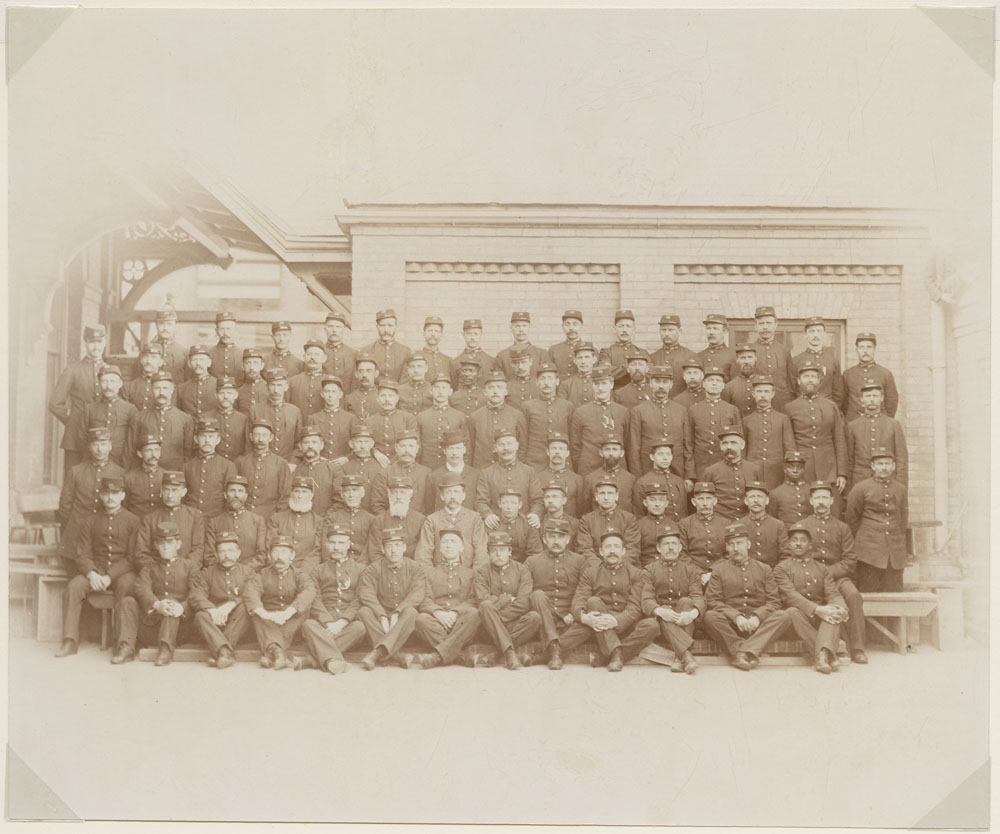 Born in bondage
Chapter I
Albert Jackson was born on the second of November, 1857, in Milford, Delaware, the youngest child of Ann Maria Jackson. He was born into slavery. Freedom was not a birthright he was given. It was one his mother would risk everything to seize.
 The road north
Chapter II
After two of her sons were seized and sold, and her husband died of grief, Ann Maria Jackson made her choice. With help from the Underground Railroad, she fled the United States with seven children. In 1858 they reached Toronto. Albert, still a toddler, arrived in a country where he could be free.
Chapter III
The family settled in St. John's Ward, the downtown neighbourhood that welcomed so many who had come north before the American Civil War. There Albert grew up and was educated, an ordinary Toronto boy in an extraordinary community of people who had walked out of slavery into a new life.
 The appointment
Chapter IV
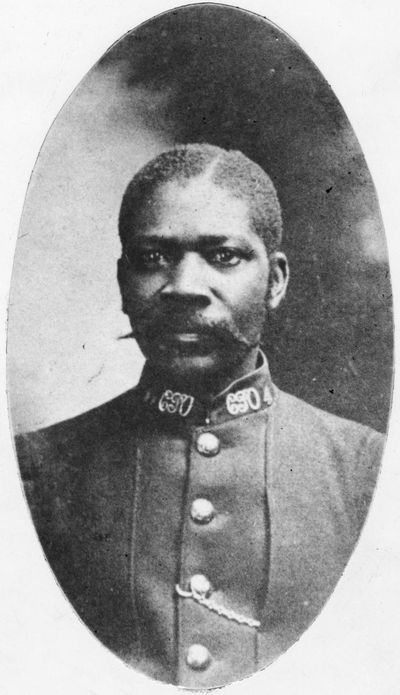
On May 12, 1882, Albert Jackson was appointed a letter carrier for the Toronto Post Office. It was a respected civil service position, and one almost never given to a man of colour in nineteenth century Canada. The mailbag was his. For a moment.
Chapter V
His white colleagues refused to train him. Rather than teach a Black man his route, the other carriers turned their backs, and Jackson's supervisor pushed him into an indoor job as a hall porter instead. The appointment he had earned was quietly being taken away.
Chapter VI
The community would not let it stand. They organized a public meeting, formed a committee to advocate for him, and took the fight into the newspapers. A heated debate over one man's job ran across the city's press. Toronto was being asked what kind of city it wanted to be.
Chapter VII
With an election near and Black voters watching, Prime Minister Sir John A. Macdonald lent his support. The pressure worked. On June 2, 1882, Albert Jackson began his training. He would walk his route after all, the first Black letter carrier in Toronto.
 The long route
Chapter VIII
In 1883 Albert married Henrietta Elizabeth Jones, and together they raised four sons. Day after day, year after year, he carried the mail through Harbord Village and the Annex. In 1914 he bought a house at 213 Brunswick Avenue, a few streets from his route; his family would hold it until 1970. He served the Toronto Post Office for thirty-six years, until his death on the fourteenth of January, 1918. He is buried in the Toronto Necropolis.
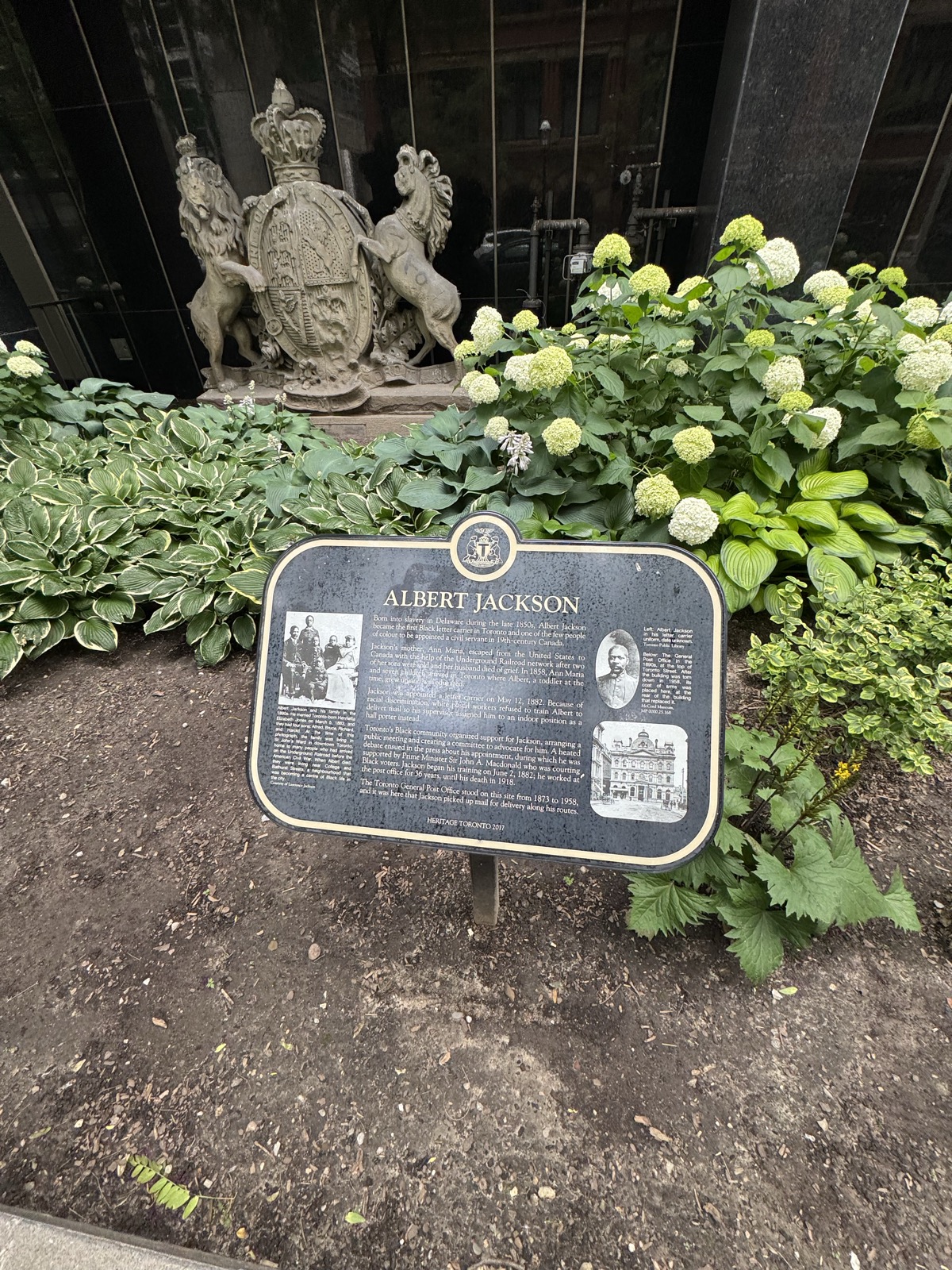 Not forgotten
Chapter IX
More than a century on, Toronto remembers. A Heritage Toronto plaque marks the ground where he collected his mail. A downtown laneway now bears his name. And in 2019 his face travelled the country on a Canada Post stamp. The man they tried to keep off the streets is written into them.
See how he is rememberedAn interactive conversation
Ask him about the road north, the day his route was taken away, or the city that fought to give it back. His answers are drawn from the historical record and told in his own voice.
Press his coat, his collar or his sleeve
A tribute experience. Albert's replies are drawn from documented history, and the voice and portrait motion are an interpretation, not a recording or likeness of his actual speech.
Legacy
The man they tried to keep off the streets is now written into the city, in bronze, on a street sign, on a national stamp, and over the door of the plant where Toronto's mail is sorted.
2013
A laneway off Harbord Street, in the Harbord Village neighbourhood he walked for decades, was officially named Albert Jackson Lane, turning his daily route to work into a permanent place on the map.
2017
Heritage Toronto placed a plaque telling his story on the ground where the old Toronto General Post Office once stood, the very site where Jackson collected the mail he carried across the city.
2019
For Black History Month, Canada Post issued a commemorative stamp portraying Albert Jackson in uniform on a Toronto street, sending his story into homes across the country.
2024
The Government of Canada designated Albert Calvin Jackson a National Historic Person, recognizing one of the first mail carriers of African descent in the country's postal service.
2023
Canada Post named its new Scarborough mail plant the Albert Jackson Processing Centre, announced in 2022 and opened the following spring. The mail he was once refused the right to carry now moves through a building named after him.
Born into slavery in Milford, Delaware in 1857, Albert Jackson became the first Black letter carrier in Toronto and one of the few people of colour to be appointed a civil servant in 19th-century Canada.
Jackson was appointed a letter carrier on May 12, 1882. Because of racial discrimination, white workers refused to train Albert to deliver mail so his supervisor assigned him to an indoor position as a hall porter instead. Toronto's Black community organized support for Jackson, arranging a public meeting and creating a committee to advocate for him. A heated debate ensued in the press about his appointment, during which he was supported by Prime Minister Sir John A. Macdonald who was courting Black voters. Jackson began his training on June 2, 1882; he worked at the post office for 36 years, until his death in 1918.
Sources
Every image on this page can be opened at full size where it appears in the story. These are the sources behind it, and the record of a life that was documented unevenly.
Images are shown for educational and commemorative purposes. Rights remain with the holders named above.
About this project
This is a working demonstration, built by Saylavy around a single Heritage Toronto subject. Albert Jackson's is the story we chose. The point is that any story in the city's archive could be told this way.
Visitors put questions to Albert in his own voice and hear the answers aloud. Every reply is grounded in a written record kept in one auditable file, and he is instructed to say plainly when the record does not answer. Nothing is invented.
The Atlas of Lives puts five hundred and ten lives on a globe across Canada, Albert and his mother among them, alongside all 312 of your plaques on the streets where they stand.
Sources are named, images are credited, and where the record is thin the site says so. It meets WCAG AA contrast throughout, works by keyboard, and respects reduced-motion settings.
Made as a tribute and as a proposal. If Heritage Toronto would like to see another subject treated this way, that is exactly the conversation we are hoping to have.
How the collaboration works
Three hundred and twelve plaques already stand in the ground, and every one of them carries a story it cannot be asked about. A code fixed beside the plaque, or etched into its own corner, opens that plaque's voice on the visitor's phone while they are standing in front of it. Fabrication, installation and everything it costs to run are ours.
Option one
A small anodised plate on the existing post, under the plaque. Nothing is drilled, etched or fixed to the original casting, and the whole thing lifts off with two bolts. This is the one we would propose for plaques already in the ground.
Option two
The code sits in a corner of the plaque, cast or etched with the rest of the text, in the same bronze. It reads as part of the object rather than an addition to it. For new plaques and for replacements, this is the better answer.

Every code on this page is real and carries a real address. This one opens Albert Jackson's conversation; the code on the plaque above it opens William Peyton Hubbard's. In the street, a code on Hubbard's plaque on Broadview would open Hubbard, standing where he lived.
Printed at 25 mm and up, with error correction set high enough to survive weather, grime and a scratched surface.
Heritage Toronto keeps
Start with one plaque. If it does not earn its place, we take the plate off and you have lost nothing.
Watch
The whole proposal, end to end. If you only have a minute, start here.
Hosted on YouTube, so it can be forwarded, embedded in a report, or shown in a meeting room without this site.